

Dominican Blue Carbon Exchange for the Restoration and Conservation of Mangroves in the Provinces of Montecristi and Puerto Plata
Project Budget
2,000,000.00 USD
Does the project benefit marginalized groups?
Yes
Type of Investment
Grant
Project Description
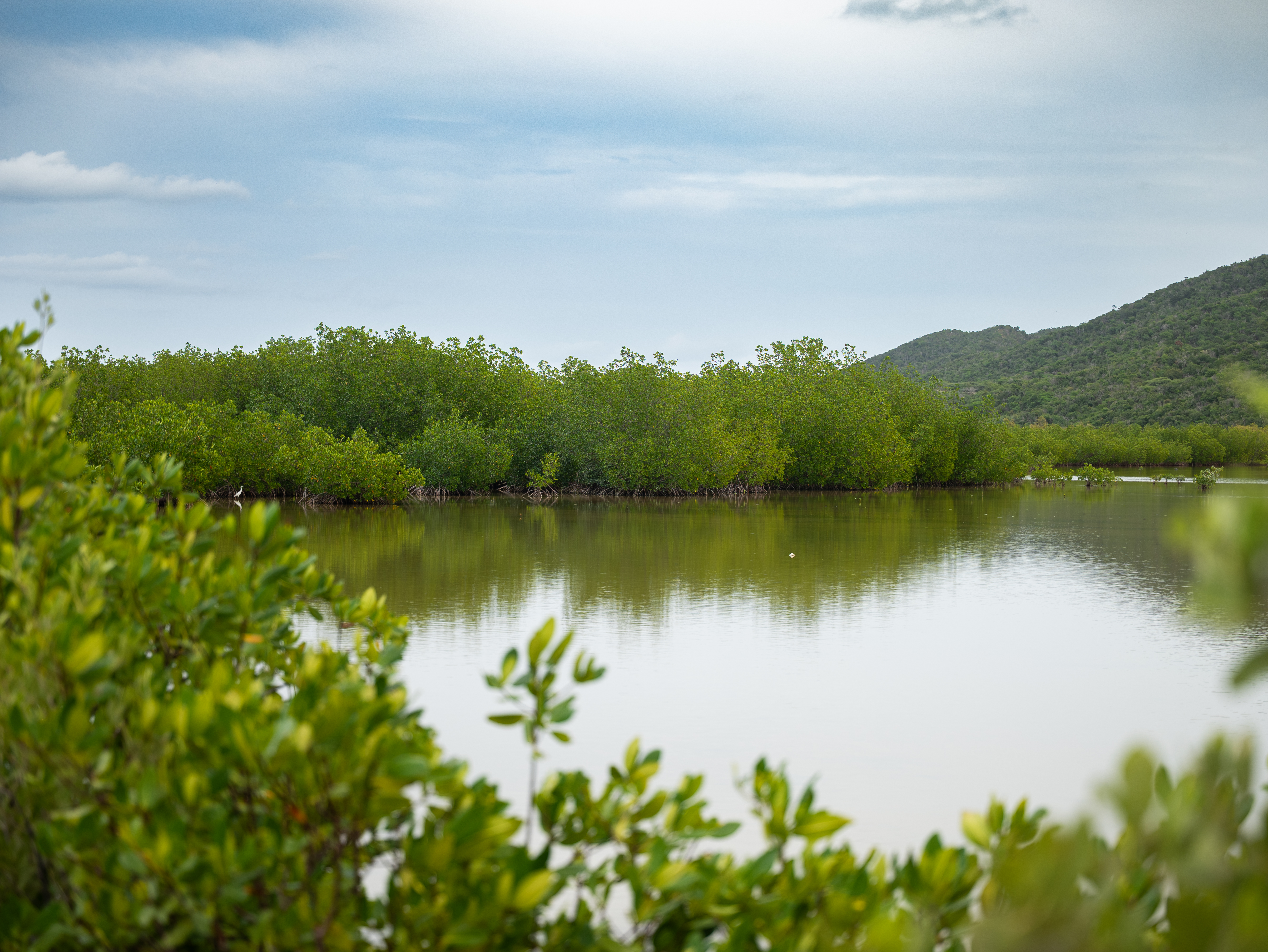
The Dominican Blue Carbon Exchange for the Restoration and Conservation of Mangroves in Montecristi and Puerto Plata is a scalable nature-based finance initiative designed to transform mangrove conservation and restoration into a long-term mechanism for coastal resilience, climate mitigation, biodiversity protection and sustainable blue economy development in the Dominican Republic.
The project responds to two interconnected challenges: the degradation of mangrove ecosystems that provide critical coastal protection, fisheries habitat and carbon sequestration services, and the absence of an integrated financial and governance mechanism capable of mobilizing sustained investment for their long-term management. Rather than operating as a stand-alone restoration project, the initiative combines ecological restoration, internationally recognized carbon standards, community stewardship, transparent governance and blue finance within a single scalable model.
The project is structured as a grouped blue carbon initiative under the Verra Verified Carbon Standard (VCS), allowing new Project Activity Instances (PAIs) to be progressively incorporated as technical readiness and financing increase. The current ORRAA/UK Blue Planet Fund-supported phase is establishing the model through VCS validation, standardized Monitoring, Reporting and Verification (MRV), restoration of 10 hectares of degraded mangroves, conservation actions across 5 hectares, and the structuring of the Dominican Blue Carbon Exchange Trust. These 15 hectares serve as a technical and operational proof of concept rather than the project’s final scale.
Following this proof of concept, the project will progressively scale through additional Project Activity Instances (PAIs) toward its identified landscape-scale potential of approximately 230 hectares of mangrove restoration and 1,000–1,500 hectares of mangrove conservation. This modular structure is designed to reduce transaction and investment risks and progressively mobilize carbon finance, blended finance and public-private investment.
The project directly engages coastal households, small-scale fishers, community brigades, women, youth and other vulnerable groups whose livelihoods depend on healthy coastal ecosystems. Community members participate in restoration, surveillance, fire prevention, waste management and ecological monitoring, strengthening local ownership and resilience.
A central component is the Dominican Blue Carbon Exchange Trust, which is being designed to provide transparent governance, fiduciary oversight, equitable benefit-sharing and reinvestment of future carbon revenues into ecosystem stewardship and community resilience.
Ultimately, the project seeks to establish a replicable blue finance model in which verified environmental outcomes can attract sustained investment, enabling mangroves to function not only as protected ecosystems, but as valuable natural infrastructure supporting resilient communities and a sustainable Caribbean blue economy.
Project Sector
- Coastal Protection and Restoration
- Blue Carbon Sequestration
- Marine Conservation and Biodiversity
- Policy and Governance
- Ecosystem Services
- Community Resilience and Adaptation
Target Beneficiaries
- Small-Scale Fishers and Fishing
- Coastal Households and Vulnerable Populations
- Women in Marine and Coastal Economies
- Youth and Early-Career Professionals
- Marine Transport and Shipping Workers
- Academic and Research Institutions
Project Location
- Dominican Republic
Project Partners
Native Language
Context / Problem Description
Coastal communities in Montecristi and Puerto Plata, on the northern coast of the Dominican Republic, depend heavily on mangrove and coastal ecosystems for fisheries, shoreline protection, climate regulation, biodiversity and other ecosystem services. However, these ecosystems are increasingly affected by hydrological disruption, land-use change, waste accumulation, pollution, vegetation dieback and climate-related pressures. In Puerto Plata in particular, the current project assessment identifies land-use change, waste accumulation and altered hydrological conditions as important pressures on mangrove systems.
Altered water flows and sediment dynamics can interrupt the natural exchange processes required for mangrove survival, causing vegetation mortality and soil degradation. At the same time, pollution and unmanaged waste place additional pressure on already vulnerable ecosystems. As mangroves deteriorate, their capacity to function as natural coastal infrastructure declines, increasing the exposure of coastal settlements to erosion, flooding, storm surge and sea-level rise. The loss and degradation of mangroves also reduce nursery habitat for fish and other marine species, directly affecting small-scale fishers and households whose livelihoods depend on healthy coastal ecosystems.
Earlier project analysis also identified broader pressures including deforestation, conversion of coastal land, resource extraction, intensive fishing, pollution, infrastructure development and climate change. These pressures contribute to biodiversity loss, habitat degradation and the erosion of ecosystem services upon which local communities depend.
The challenge, however, is not ecological degradation alone. Communities and local actors face limitations in technical capacity for restoration, fire prevention, ecological monitoring, surveillance and waste management, which constrain the continuity and effectiveness of locally led conservation efforts.
A major additional barrier is the absence of an operational financial and governance system capable of translating the climate, biodiversity and resilience value of mangroves into sustainable financing. There is currently no fully operational mechanism capable of managing future blue carbon revenues, ensuring transparent and equitable benefit-sharing, and systematically reinvesting resources into ecosystem stewardship and community resilience. This institutional gap limits investor confidence and access to blue carbon and other forms of results-based climate finance.
Finally, restoration initiatives often remain relatively small and dependent on short-term grant funding because they lack the standardized carbon accounting, Monitoring, Reporting and Verification (MRV), governance and verification systems required to attract larger-scale investment. Without these structures, it is difficult to move from isolated restoration interventions to a financially sustainable landscape-scale model.
The underlying problem is therefore the combination of mangrove ecosystem degradation, climate and livelihood vulnerability, limited local management capacity, and the lack of integrated technical, institutional and financial systems capable of sustaining and scaling conservation and restoration over the long term. Addressing these interconnected barriers is essential if mangroves in Montecristi and Puerto Plata are to continue supporting biodiversity, coastal livelihoods, climate resilience and sustainable blue economy development.
Project Approach
The project applies an integrated and phased approach that combines mangrove restoration and conservation, internationally recognized carbon standards, community participation, institutional governance and blue finance. The model is designed not as a one-time restoration intervention, but as a scalable system in which ecological results can be measured, verified and progressively linked to sustainable financing.
The technical approach is structured as a grouped blue carbon project under the Verra Verified Carbon Standard (VCS). This allows individual Project Activity Instances (PAIs) to be incorporated progressively without redesigning the overall project framework. The current implementation phase serves as the technical and operational proof of concept, establishing the carbon baseline, standardized Monitoring, Reporting and Verification (MRV) protocols, restoration methodologies and documentation required for VCS validation.
On the ground, the current phase combines hydrological restoration, site preparation, native mangrove planting, conservation and ecological monitoring. Approximately 50,000 mangrove seedlings will be planted across 10 hectares of degraded mangroves, while conservation measures will be implemented across an additional 5 hectares. Interventions will be georeferenced and monitored to document ecological performance and generate reliable information for the MRV system.
In parallel, the project is advancing the Dominican Blue Carbon Exchange Trust as the institutional and financial mechanism required for long-term sustainability. The approach includes development of the governance framework, operating procedures, fiduciary arrangements, stakeholder consultation and preparation of the legal and technical dossier required for formalization. The Trust is intended to provide transparent management of future carbon revenues, equitable benefit-sharing and reinvestment in mangrove stewardship and coastal resilience.
Community participation is embedded throughout implementation. Coastal residents, fishers and local environmental actors participate in restoration, monitoring and stewardship activities. Capacity-building covers mangrove restoration, fire prevention and response, coastal waste management and community-based ecological monitoring. The project also incorporates GEDSI considerations so that women, youth and vulnerable groups can participate meaningfully in implementation and future governance structures. Community-generated ecological information will contribute directly to the project’s MRV system, linking local stewardship to the integrity of the blue carbon finance model.
Implementation is supported through complementary expertise: CI-Atabey leads overall coordination and stakeholder engagement; Coralia Environmental provides technical support on VCS methodology, carbon accounting, baseline modelling and MRV; Global Coralition supports field restoration, ecological monitoring and community capacity building; and the Ministry of Environment and Natural Resources supports regulatory alignment, technical oversight and coordination with national environmental frameworks.
Building on the technical and institutional foundations established during the current proof-of-concept phase, the proposed next phase will support progressive expansion through additional Project Activity Instances (PAIs). The project will advance toward the identified potential of approximately 230 hectares of mangrove restoration and 1,000–1,500 hectares of mangrove conservation, using standardized restoration methodologies, VCS-aligned MRV systems, community stewardship and the governance architecture of the Dominican Blue Carbon Exchange. This phased approach is designed to reduce technical and investment risk and mobilize carbon finance, blended finance and public-private investment at landscape scale.
Project Objective
To establish a technically validated, transparent, inclusive and scalable blue carbon finance model for the long-term restoration and conservation of mangrove ecosystems in Montecristi and Puerto Plata, while strengthening coastal resilience and creating the conditions for sustainable future investment.
The project will achieve this by advancing the grouped blue carbon project under the Verra Verified Carbon Standard (VCS), establishing standardized MRV and carbon accounting systems, demonstrating the model through the current 10 hectares of restoration and 5 hectares of conservation, strengthening community participation and local capacity, and advancing the Dominican Blue Carbon Exchange Trust toward operational readiness as the governance and benefit-sharing mechanism for future blue carbon revenues.
The objective is to use the technical, institutional and operational foundation established during the current phase to progressively scale the grouped blue carbon project through additional PAIs, advancing toward approximately 230 hectares of mangrove restoration and 1,000–1,500 hectares of mangrove conservation while mobilizing sustainable blue finance for long-term ecosystem stewardship and coastal resilience.
Anticipated Outcome
The anticipated outcome is the establishment of a validated, investable and scalable blue carbon model that enables the long-term restoration and conservation of mangrove ecosystems in Montecristi and Puerto Plata while mobilizing sustainable finance for coastal resilience and community benefits. The current ORRAA-supported phase is establishing the technical, institutional and operational foundations of this model through Verra Verified Carbon Standard (VCS) validation, implementation of an initial on-the-ground proof of concept involving 10 hectares of mangrove restoration and 5 hectares of conservation, development of robust Monitoring, Reporting and Verification (MRV) systems, and advancement of the governance and fiduciary structure of the Dominican Blue Carbon Exchange Trust. These initial interventions are intended to demonstrate and de-risk the model rather than define its ultimate scale. Building on this foundation, the project is expected to transition toward larger Project Activity Instances (PAIs), progressively advancing toward the broader landscape-scale potential identified by the project: approximately 230 hectares of mangrove restoration and 1,000–1,500 hectares of mangrove conservation, subject to financing, technical feasibility and verification requirements. Environmentally, this expansion is expected to improve mangrove ecosystem integrity, hydrological function, biodiversity habitat, fisheries nursery areas, shoreline protection and carbon sequestration, while increasing the resilience of coastal communities to erosion, flooding, storm surge and other climate-related impacts. Financially and institutionally, the anticipated outcome is a credible mechanism capable of connecting verified mangrove conservation and restoration outcomes with blue carbon and blended-finance opportunities. The Dominican Blue Carbon Exchange Trust is expected to provide transparent governance, fiduciary oversight, benefit-sharing arrangements and mechanisms for reinvesting future revenues into ecosystem stewardship and community resilience. Ultimately, the project seeks to move beyond a donor-funded restoration model toward a self-reinforcing blue finance system, where validated MRV, carbon finance, public-private partnerships and successive PAIs can mobilize investment to progressively scale mangrove restoration and conservation in the Dominican Republic.
By clicking below, the Project Owner will be notified of your interest in their project and you can continue the conversation with them via email. You will now be able to see this project in your Dashboard.
Connect NowJoin the largest maritime innovation hub in the Caribbean
Chart a course towards a sustainable future with us.
Get in Touch